Threats
Drainage and Hydrologic Alteration
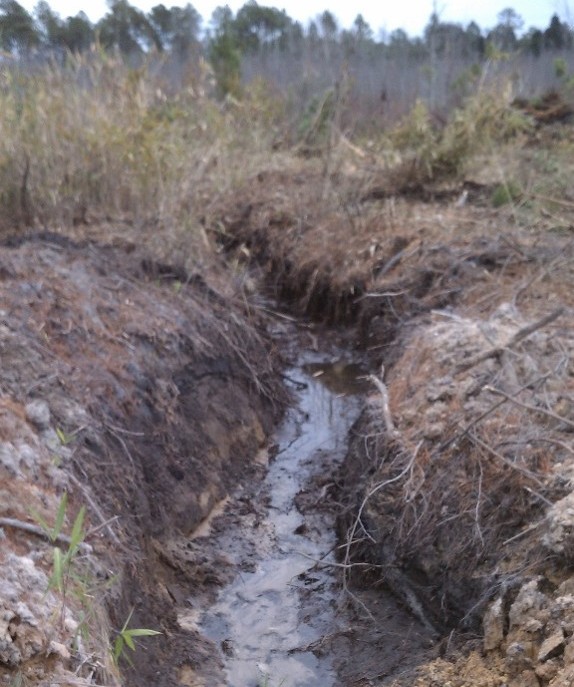
Drainage is one of the most widespread and damaging alterations to Carolina Bays. Networks of ditches, canals, culverts, and water-control structures have been constructed to remove water for agriculture, forestry, housing, and other land uses. These modifications lower the water table and disrupt the natural seasonal flooding that defines Carolina Bays. As hydroperiods become shorter or disappear altogether, amphibian breeding habitat is lost and native wetland vegetation is gradually overtaken by species adapted to drier conditions. Recent changes to the Federal Clean Water Act and state wetland regulations have reduced the protections afforded to wetlands, further increasing the threat from ditching, filling, and development.
Photo: Ditch draining a wetland, Jeff Marcus
Filling and Development
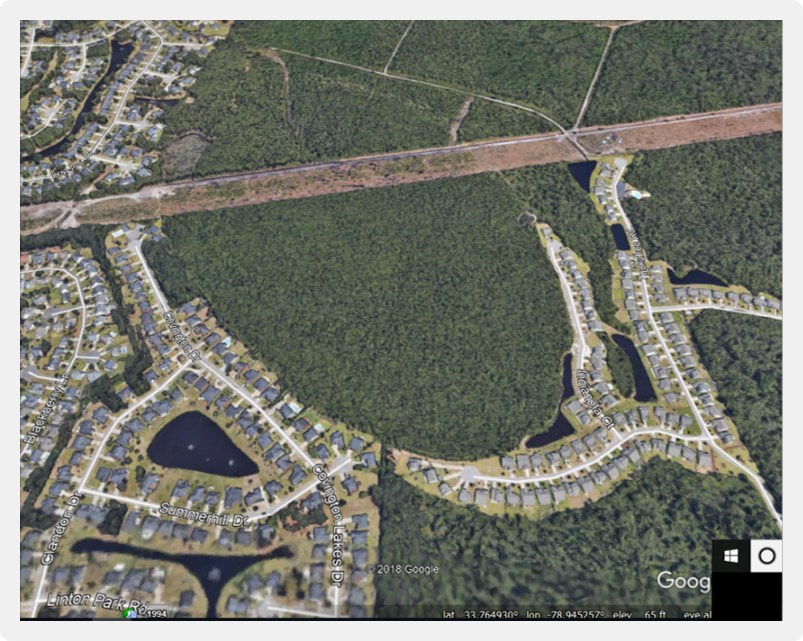
Many Carolina Bays have been partially or completely filled with soil, sand, dredged material, construction debris, or other fill to create land for agriculture, silviculture, residential and commercial development, roads, and much more. Filling can alter the basin’s natural shape and depth, reducing its ability to collect and retain seasonal rainfall. These changes diminish floodwater storage, water filtration, carbon sequestration, and habitat for the specialized plants and animals that depend on intact Carolina Bays.
Photo: Housing development in and around Carolina Bays near Lewis Ocean Bay, SC, Google Maps
Roads and Habitat Fragmentation
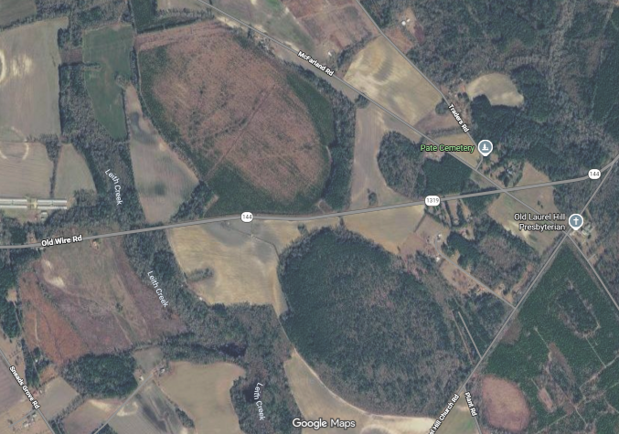
Several species rely on both the wetland and surrounding upland forest of Carolina Bays during different stages of their lives. Roads tend to divide these connected habitats, making it more difficult and dangerous for wildlife to move between breeding, feeding, and overwintering areas. Fragmentation can isolate populations and reduce long-term ecosystem resilience.
Photo: Roads fragmenting bays in Scotland County, NC, Google Maps August 2026
Fire Suppression
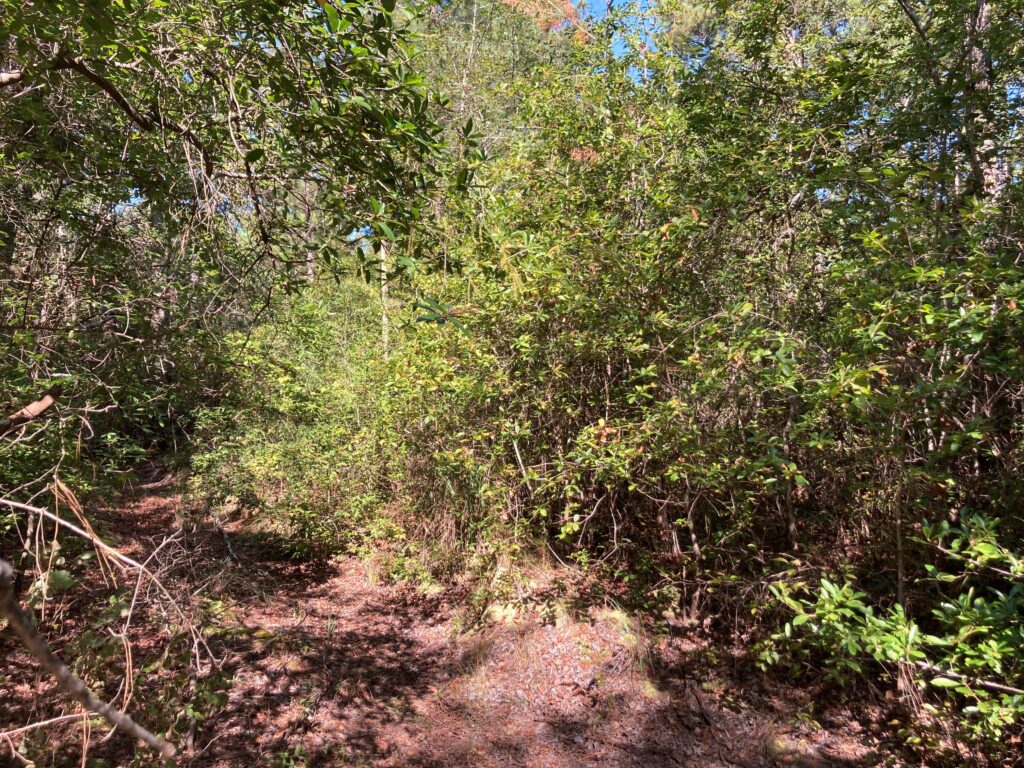
Many Carolina Bays evolved with frequent, low-intensity fires that maintained open, diverse plant communities. When fire is excluded, shrubs and hardwoods gradually encroach into wetlands and shade out grasses and wildflowers. Woody vegetation can suck up more water from the wetland, altering hydrology and habitat suitability.
Photo: Dense woody vegetation in fire suppressed bay, Lydie Costes
Invasive Species
Carolina Bays are vulnerable to a variety of invasive plants, animals, and insects that can outcompete or harm native species and disrupt natural ecosystem processes.
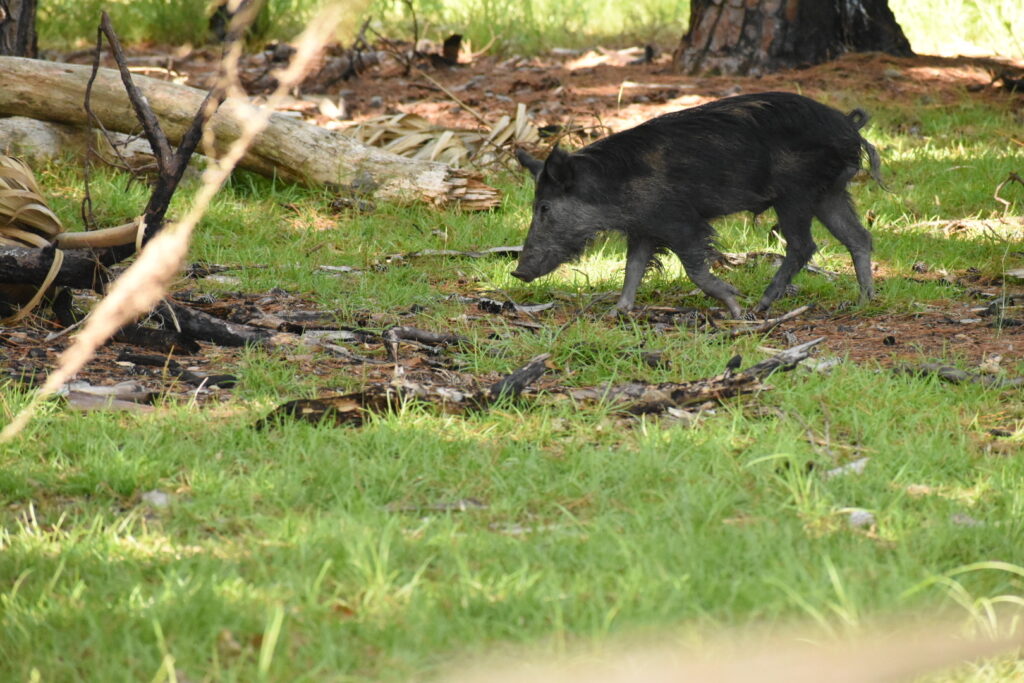
Invasive insects such as the red imported fire ant (Solenopsis invicta) can prey on native amphibians, reptiles, and ground-nesting birds, while invasive animals like feral swine (Sus scrofa) disturb wetland systems by rooting through soils and vegetation, accelerating erosion and damaging sensitive plant communities.
Photo: Feral Hog, (c) willvuyk, some rights reserved (CC BY-NC) · iNaturalist
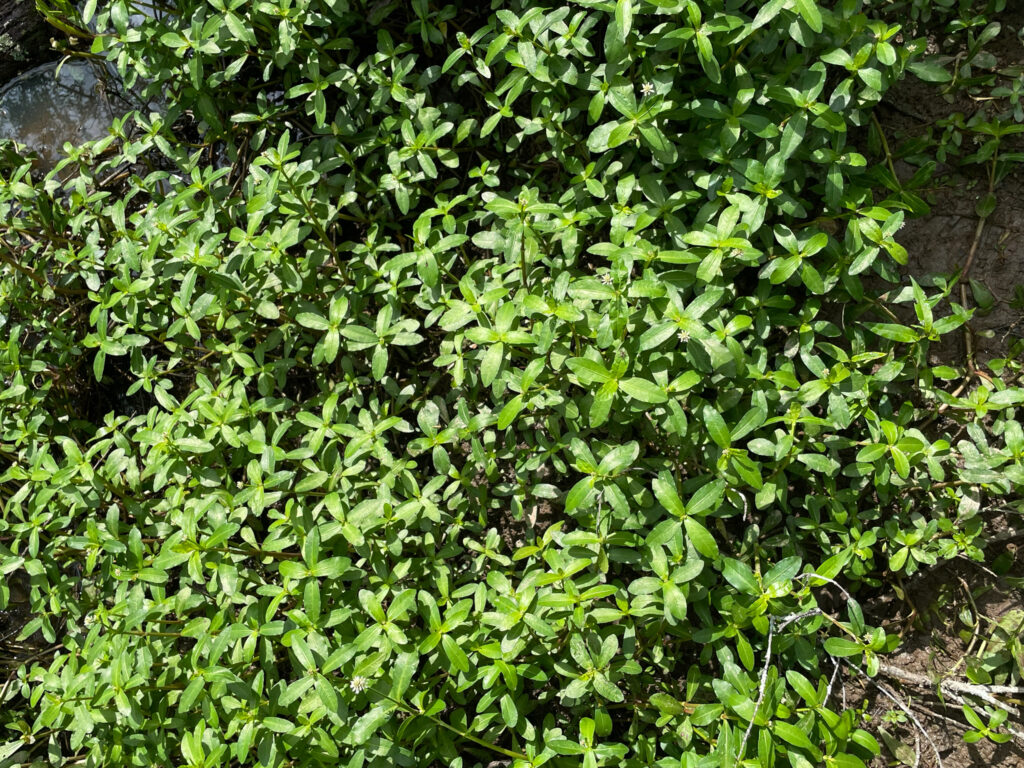
Aggressive terrestrial plants such as Sericea lespedeza (Lespedeza cuneata) and Japanese stiltgrass (Microstegium vimineum) can form dense stands that crowd out native vegetation and alter habitat structure. Aquatic plant species, such as waterthyme (Hydrilla verticillata) and alligatorweed (Alternanthera philoxeroides), congest open-water habitat by forming dense, tangled floating mats. These mats can block sunlight, impede water flow, and deplete oxygen, leading to degraded water quality.
Photo: Alligatorweed, (c) John V., some rights reserved (CC BY-NC) · iNaturalist
Agriculture and Forestry Impacts
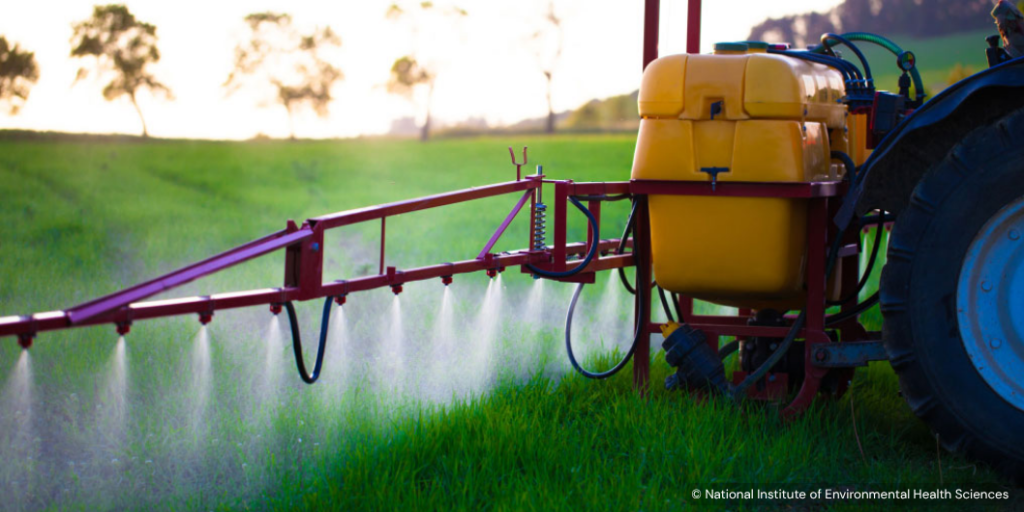
Working lands surround many Carolina Bays, making thoughtful management essential. Intensive forestry and agricultural practices can compact soils, alter drainage patterns, increase sedimentation, and introduce excess nutrients or pesticides into nearby systems, affecting water quality and habitat suitability.
Peat Degradation
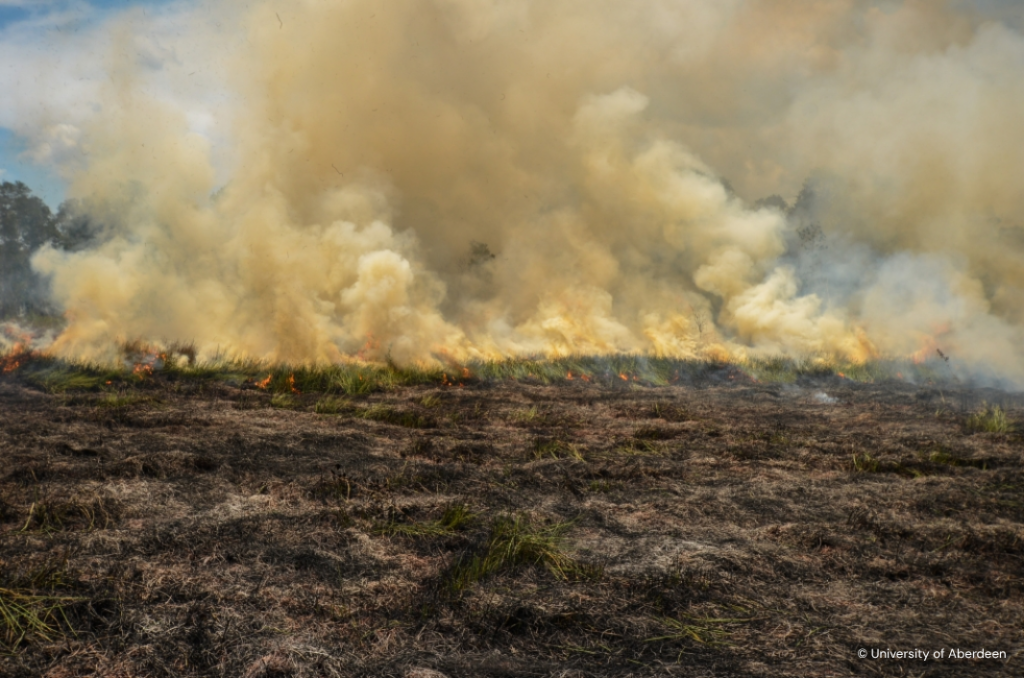
Some Carolina Bays contain peat deposits that formed over thousands of years as waterlogged conditions slowed the decomposition of plant material. When these wetlands are drained or disturbed, the peat soils are exposed to oxygen and begin to break down, releasing stored carbon while reducing the system’s ability to retain water and support specialized vegetation. As peat dries, it also becomes increasingly susceptible to smoldering ground fires that can burn deep below the surface for days or even weeks. Unlike surface fires, peat fires consume the soil itself, releasing large amounts of stored carbon, destroying seed banks and root systems, and significantly damaging an ecosystem’s structure and ability to recover.
Photo: Peat Fire, University of Aberdeen
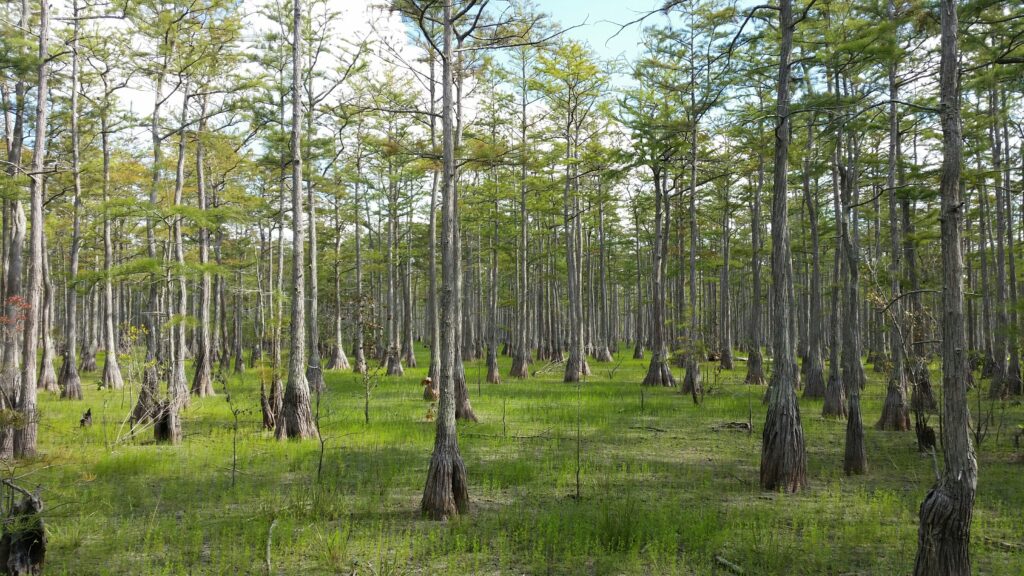
Banner Photo: Antioch Bay, Jeff Marcus