About Carolina Bays
What is a Carolina Bay?
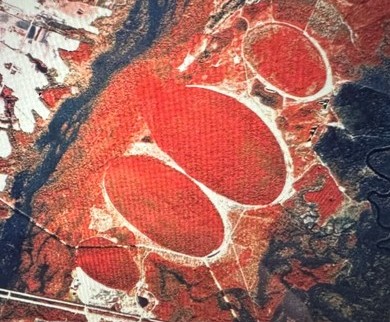
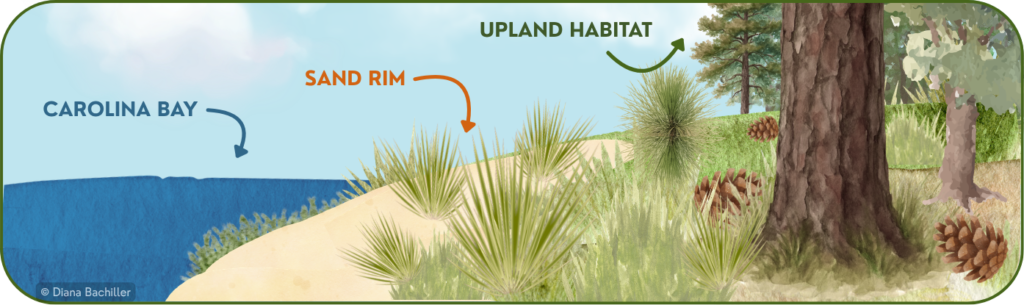
Carolina bays are shallow elliptical depressions found primarily in the Atlantic Coastal Plain (New Jersey to Florida). These wetlands provide habitat for many rare species. The name Carolina Bay comes from where these geological features reach their highest concentration, which is in North Carolina and South Carolina, and the fact that they support many plants in the “bay” family (e.g. sweet bay, red bay, etc.). They are not related to the “bays” that are ocean inlets. Carolina Bays are oriented northwest to southeast on their long axis and have sand rims that tend to be largest on the southeast side.
Photo: PeeDee Bays, SC
How to recognize a Carolina Bay
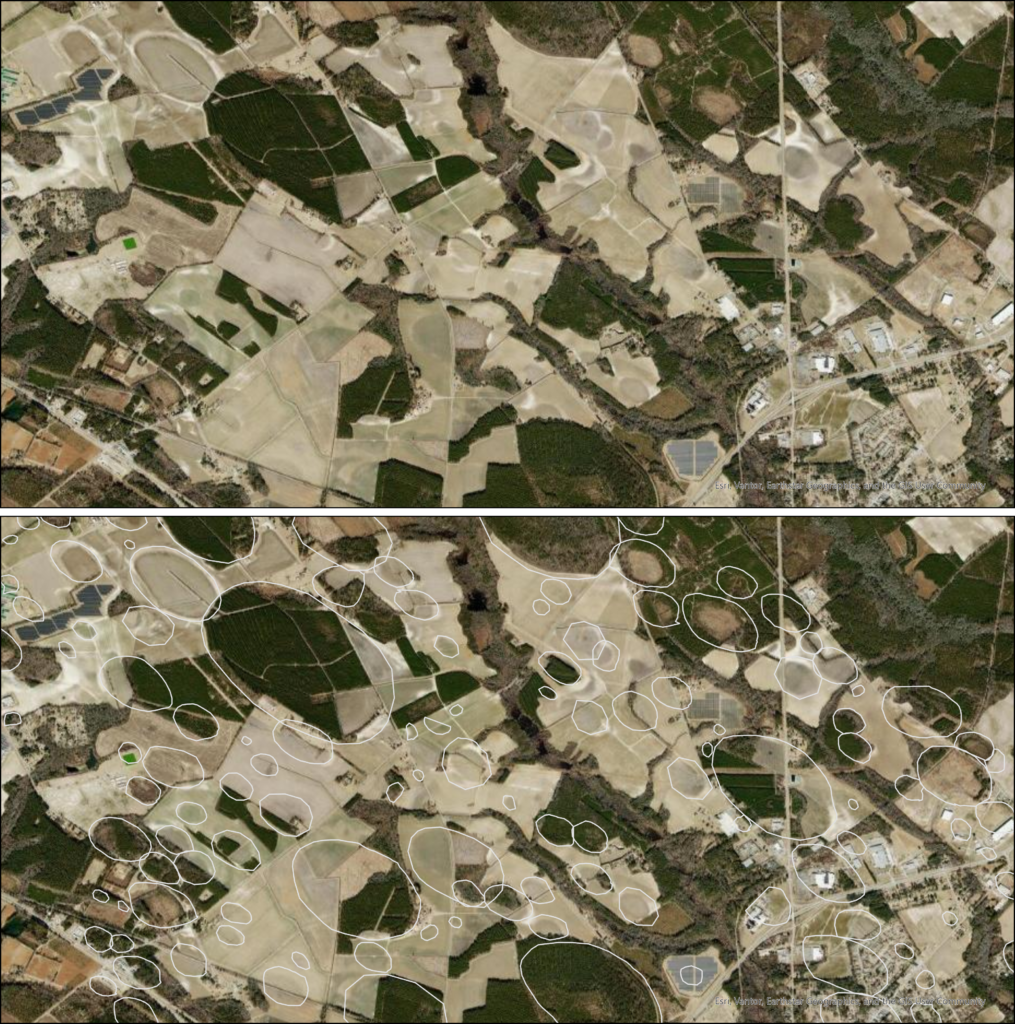
Looking at aerial imagery can provide the best clues about where Carolina Bays are located. Historical land use like ditching, draining, and conversion to agriculture can sometimes make the characteristic oval shape harder to see. Some bays hold water year-round, while others only hold water during the wettest times of year.
Photo: Aerial image of Carolina Bays in NC. In the bottom image the white outlines indicate the location of bays or where bays occurred.
Carolina Bays vary by:
- Size (from under an acre to thousands of acres)
- Hydrology (permanently or only sometimes wet)
- Soil type (clay, peat)
- Vegetation structure (open water, meadow, shrubby, forested)
- Plant communities
- Animal communities
- Condition and disturbance (many bays have been altered from their natural state)
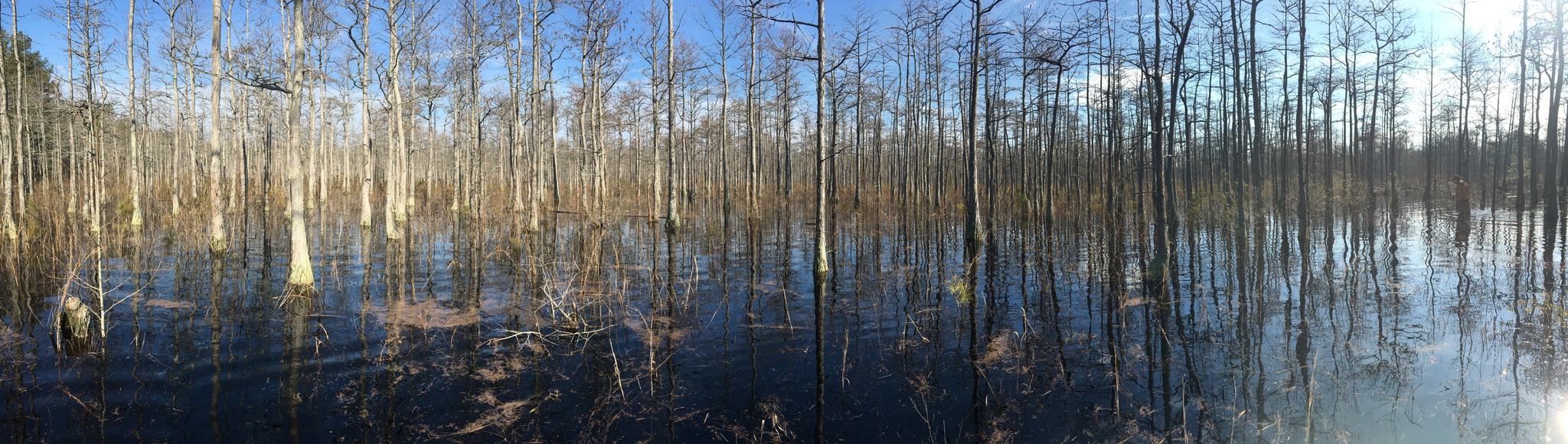
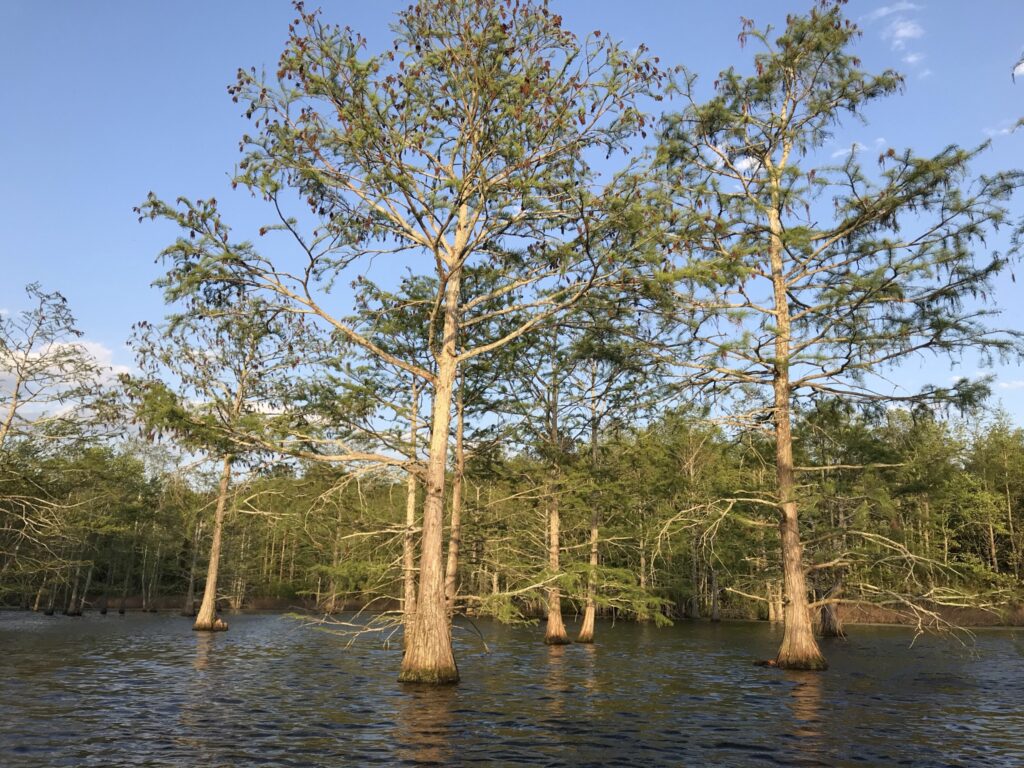
Photo: Cypress tree, Dunahoe Bay, NC, Jeff Marcus
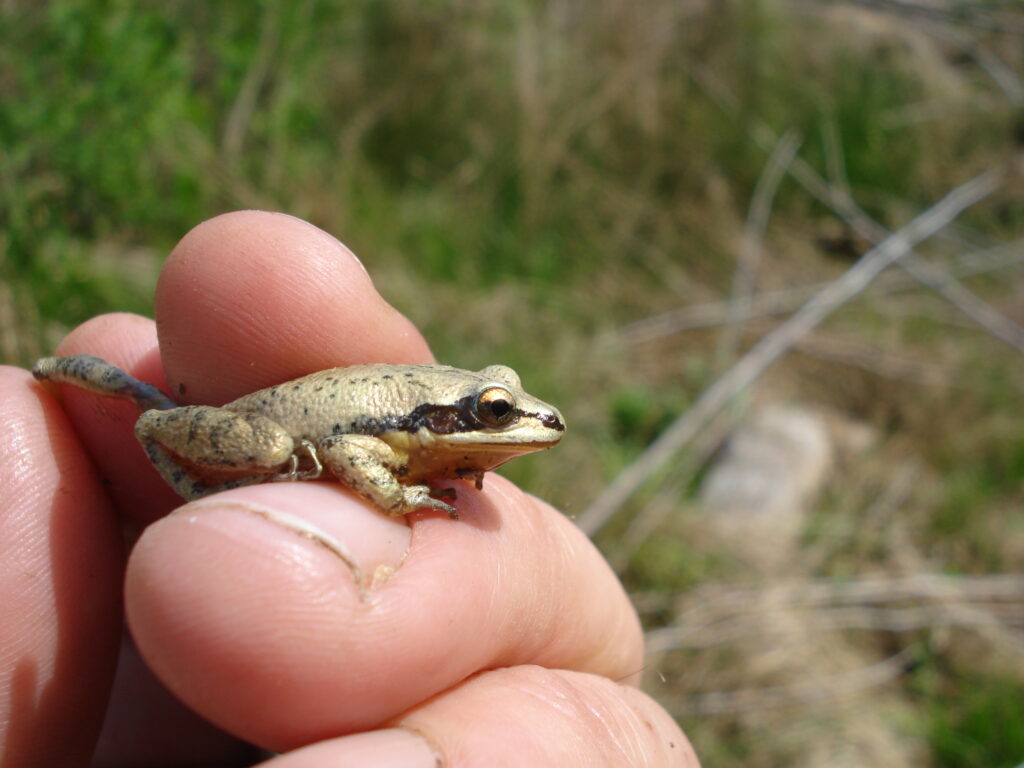
The bay itself is not the only important piece of the puzzle. Many of the species that reside in Carolina Bays also rely on nearby uplands and habitat connectivity to other bays. For example, amphibian species breed in bays when wet and then retreat to the uplands for the rest of the year. If one bay isn’t holding water when they are ready to breed, they may travel to another in search of the right conditions. Therefore, providing a connected network of bays and uplands is important to protecting the species that live in bays.
Photo: Upland Chorus Frog, Jeff Marcus
High quality upland habitat adjactent to bays is critical for many species